Pool Equipment Upgrades & Automation in Tampa Bay
A modern, efficient equipment pad planned as one system instead of replaced one failure at a time.
Start Your Project
Get a Free Quote
Free design consultation & 3D rendering. No pressure, no obligation.
Pool Remodeling
Run Your Pool for Less, With Equipment Sized for Florida
A pool equipment upgrade replaces aging pumps, filters, heaters, and controls with modern, energy-efficient components. In Tampa Bay, a single variable-speed pump installed runs about $1,500 to $3,000, and a full equipment package with pump, cartridge filter, heat pump, automation, and pad re-plumbing typically lands between $8,000 and $15,000. Most homeowners fall somewhere in between, starting with the pump and adding pieces as older equipment reaches the end of its life.
In Florida a pool runs every month of the year, so the equipment pad is one of the largest electricity users at the house. Many pools built in the 1990s and 2000s are still running single-speed pumps, small filters, and undersized plumbing that force the pump to work harder than it needs to. Replacing that equipment is one of the few home improvements that pays you back every month on the power bill.
Evolution Pools looks at the equipment pad as a system. We check pump size against your plumbing and features, filter capacity against your pool volume, and heater type against how you actually swim. You get an itemized quote that shows what each upgrade costs and what it is expected to do, so you can prioritize with real numbers.
Pricing
What Pool Equipment Upgrades & Automation Costs in Tampa Bay
Typical project: $1,500–$15,000
| Item | Typical range |
|---|---|
| Variable-speed pump, installed | $1,500–$3,000 |
| Large cartridge filter, installed | $1,000–$2,200 |
| Heat pump heater, installedSized to pool volume | $4,500–$7,500 |
| Automation system with phone control | $1,800–$4,500 |
| Equipment pad re-plumbing and valves | $800–$2,500 |
| Electrical, bonding, and breaker updates | $500–$2,000 |
Price depends mostly on how many components you replace at once, the size of your pool and features, and whether the plumbing and electrical at the pad need to be brought up to current standards.
The Variable-Speed Pump Comes First
The pump is the biggest energy user on almost every equipment pad, and it is where the largest savings come from. A single-speed pump runs at full power every minute it is on. A variable-speed pump can filter the same water at a much lower speed over longer hours, and because energy use drops sharply as speed drops, running at half speed uses only a fraction of the power. Most owners replacing a single-speed pump cut their pump energy use by well over half.
Federal efficiency standards that took effect in 2021 mean most replacement filtration pumps sold today are variable-speed anyway. The real question is whether it is set up properly. A variable-speed pump needs to be programmed for each task: low for daily filtration, higher for a cleaner, a spillover spa, or a water feature. We set those schedules during installation and walk you through them.
Filters, Plumbing, and Heaters
A pump works harder when it pushes water through a small filter and narrow pipes. Upsizing to a large cartridge filter lowers system pressure, lets the pump run slower, and stretches the time between cleanings. Cartridge filters do not require backwashing, which saves thousands of gallons of water a year compared with sand or DE filters. While the pad is open, we often replace restrictive fittings and old valves with larger, smoother plumbing.
For heating, a heat pump is the efficient choice in our climate. It moves heat from the air instead of burning fuel and works well through most of a Tampa Bay winter. Gas heaters still make sense for spas, where you want hot water in 30 to 45 minutes. Many homeowners pair a heat pump for the pool with a gas heater dedicated to the spa, especially when a spa addition is part of the remodel.
- Cartridge filters: no backwashing, lower pressure, less water waste
- Heat pumps: efficient pool heating for most of the year
- Gas heaters: fast heat for spas and occasional winter use
- Larger plumbing: lower resistance and quieter operation
Automation and Smarter Control
Automation is what makes the other upgrades pay off. A modern controller runs the pump at the right speed for each task, schedules the heater, turns on lights at sunset, and lets you adjust everything from your phone. That matters for homeowners who travel, run a short-term rental, or want to check on the pool before and after a storm.
Automation also pulls the rest of the backyard together. It can control LED pool lighting, landscape lights, spa jets, water features, and a salt chlorine generator from one app. If you are considering a saltwater conversion, adding it alongside automation lets you adjust chlorine output remotely and keep chemistry steady through Florida's heat and summer rain.
Built for Florida Conditions
Equipment pads in Tampa Bay sit outside year-round in heat, humidity, and salt air, especially near the coast in Pinellas and along the bay. We specify components rated for those conditions and for salt water, use corrosion-resistant hardware, and set equipment on a level pad with clearance for service and airflow around heat pumps.
Hurricane season adds another layer. Equipment should be on its own clearly labeled breaker so it can be shut off before a storm, and automation lets you turn everything back on in stages once power returns. Electrical work at the pad, including new circuits and bonding updates, typically requires a permit, which we pull and coordinate inspections for as part of the project.
Let's Design Your Dream Pool
Free design consultation and 3D rendering. No pressure, no obligations.
Our Process
How We Build Your Pool
Design Consultation
Free on-site visit to walk your yard, talk through how you'll use the space, and set a realistic budget.
3D Design & Proposal
A custom 3D design of your pool, spa, deck, and outdoor living space with material selections and an itemized proposal.
Engineering & Permits
Engineered plans, permit submittal to your city or county, and HOA architectural approval, all handled by us.
Construction
Excavation, steel, plumbing, gunite shell, tile and coping, paver deck, equipment, and interior finish. One team, start to finish.
Startup & Orientation
We fill the pool, balance the chemistry, and walk you through every piece of equipment before we hand over the keys.
FAQ
Pool Equipment Upgrades & Automation Questions
How much does a variable-speed pool pump cost in Tampa?
How much does it cost to replace all pool equipment?
Will a variable-speed pump lower my electric bill?
Is a heat pump or gas heater better for a pool in Florida?
Do I need a permit to replace pool equipment?
How long does pool equipment last in Florida?
Can I add automation to my existing pool equipment?
Often Paired With
Saltwater Pool Conversion
A salt chlorine generator that makes chlorine on site for softer water and steadier chemistry, installed after a review of the materials around your pool.
LED Pool Lighting
Color LED pool and spa lights that replace dim, power-hungry incandescent fixtures, with options for new light locations and app control.
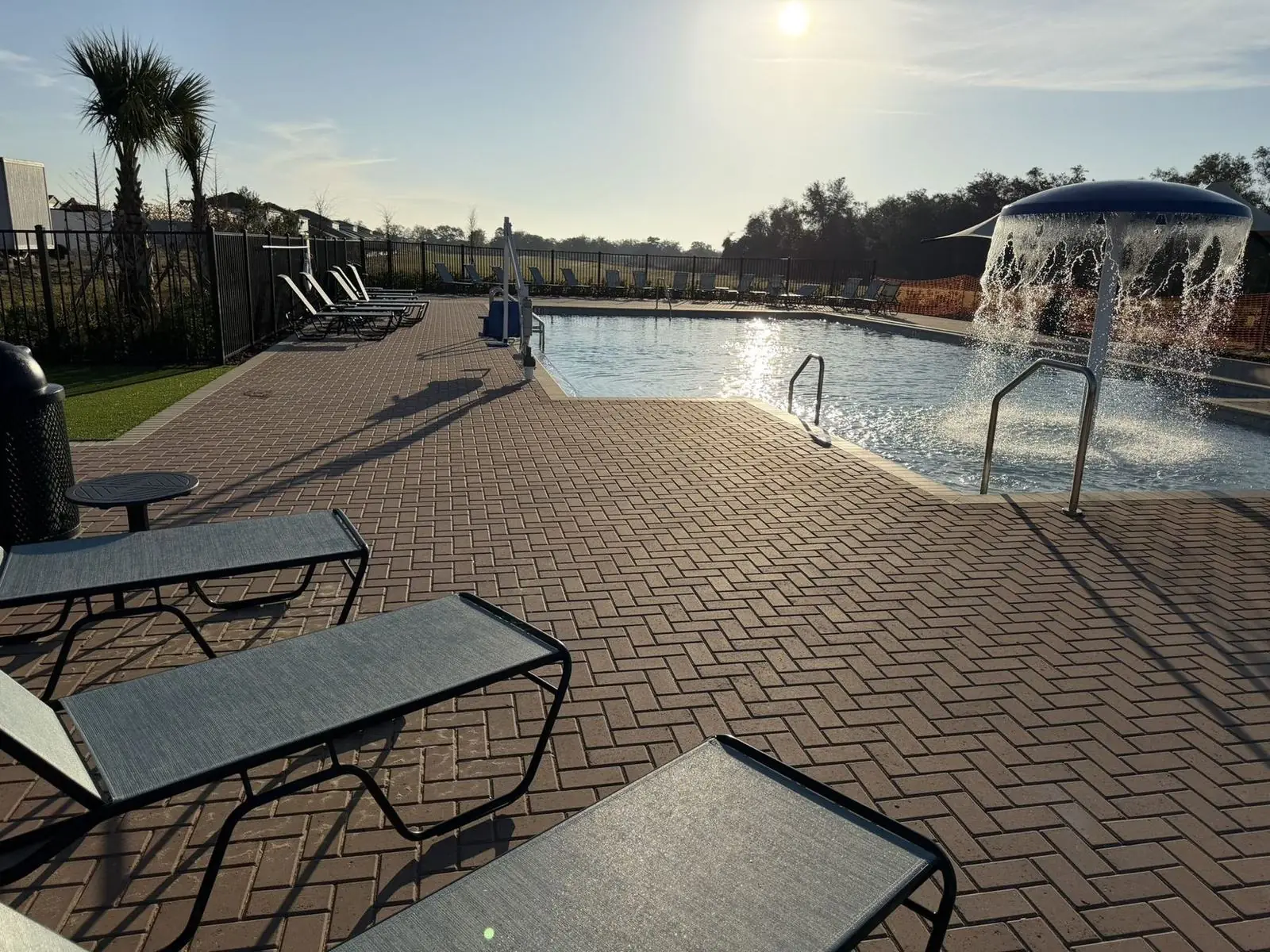
Add a Spa to Your Existing Pool
Attach a custom gunite spa to the pool you already own, raised with a spillway or flush with the deck, heated fast and finished to match.
Where We Work
Pool Remodeling Across Tampa Bay
We build in six counties along Florida's Gulf Coast. Pick your community for local details, or browse every service area.
From the Blog
Related Reading
Pool Equipment Upgrades That Lower Your Electric Bill
Variable-speed pumps, larger filters, heat pumps, LED lighting, and automation: which pool equipment upgrades actually cut operating costs in Tampa Bay, and in what order.
Saltwater vs. Chlorine Pools in Florida: What Actually Matters
Salt systems are the default on most new Tampa Bay pools. Here is what they do, what they cost, and the few situations where traditional chlorine still makes sense.
Hurricane Season Pool Prep for Tampa Bay Homeowners
What to do with your pool before a storm, what not to do (don't drain it), and how to recover safely afterward, from the team that builds and remodels pools across Tampa Bay.