Pebble Pool Finishes in Tampa Bay
The most durable interior finish for Florida pools, hand-applied over a properly prepared shell.
Start Your Project
Get a Free Quote
Free design consultation & 3D rendering. No pressure, no obligation.
Pool Resurfacing
A Pool Finish Built for Florida Sun, Salt, and Twenty Years of Swimming
A pebble pool finish is an interior surface made of small, rounded natural pebbles bound in a cement matrix, applied by hand over the pool shell and then washed or polished to expose the stone. In Tampa Bay, resurfacing a typical residential pool with a pebble aggregate finish costs about $10,000 to $20,000, depending on the size of the pool, how much prep the old surface needs, and whether new waterline tile is part of the job.
Pebble costs more up front than plaster or quartz, typically $4,000 to $10,000 more on the same pool. What you get for that difference is lifespan: with sound chemistry, a pebble finish routinely lasts 15 to 20 years or longer in Florida, roughly twice what white plaster delivers. For homeowners who plan to stay in the house, it is usually the lowest cost per year of any finish.
Evolution Pools installs pebble finishes across Hillsborough, Pinellas, Pasco, Manatee, Sarasota, and Hernando counties. We bring wet samples to your backyard, inspect the shell before anything is quoted, and give you an itemized price so you can see exactly where the money goes.
Pricing
What Pebble Pool Finishes Costs in Tampa Bay
Typical project: $10,000–$20,000
| Item | Typical range |
|---|---|
| Drain-down, chip-out of old finish, and haul-offBond-coat prep over a sound surface costs less | $1,800–$3,500 |
| Hollow-spot, crack, and fitting repairsSounded and quoted after the pool is drained | $300–$1,800 |
| Pebble aggregate finish, hand-appliedExposed or polished; driven by square footage | $7,000–$13,000 |
| New waterline tile (optional) | $2,500–$6,000 |
| Fill, startup chemistry, and 30-day care plan | $300–$700 |
Pool surface area, chip-out versus bond coat, the pebble blend you choose (polished blends cost more), and any tile or coping work are what move the final number.
Exposed vs. polished pebble
Pebble finishes come in two textures. Exposed pebble is troweled on, then the top layer of cement is washed away with a mild acid solution so the rounded tops of the stones stand slightly proud of the surface. It has a natural, river-bottom feel and the most slip resistance on steps and benches. Polished pebble uses smaller stones and is ground down after curing, which leaves a smoother surface that is easier on feet and closer to the feel of quartz.
Neither is better in every case. Families with young swimmers who spend hours in the pool often prefer polished pebble or a fine exposed blend. Owners who want the most natural look, or who use the pool mostly for lounging on a sun shelf, are usually happy with standard exposed pebble. We bring both textures so you can run a hand across them before deciding.
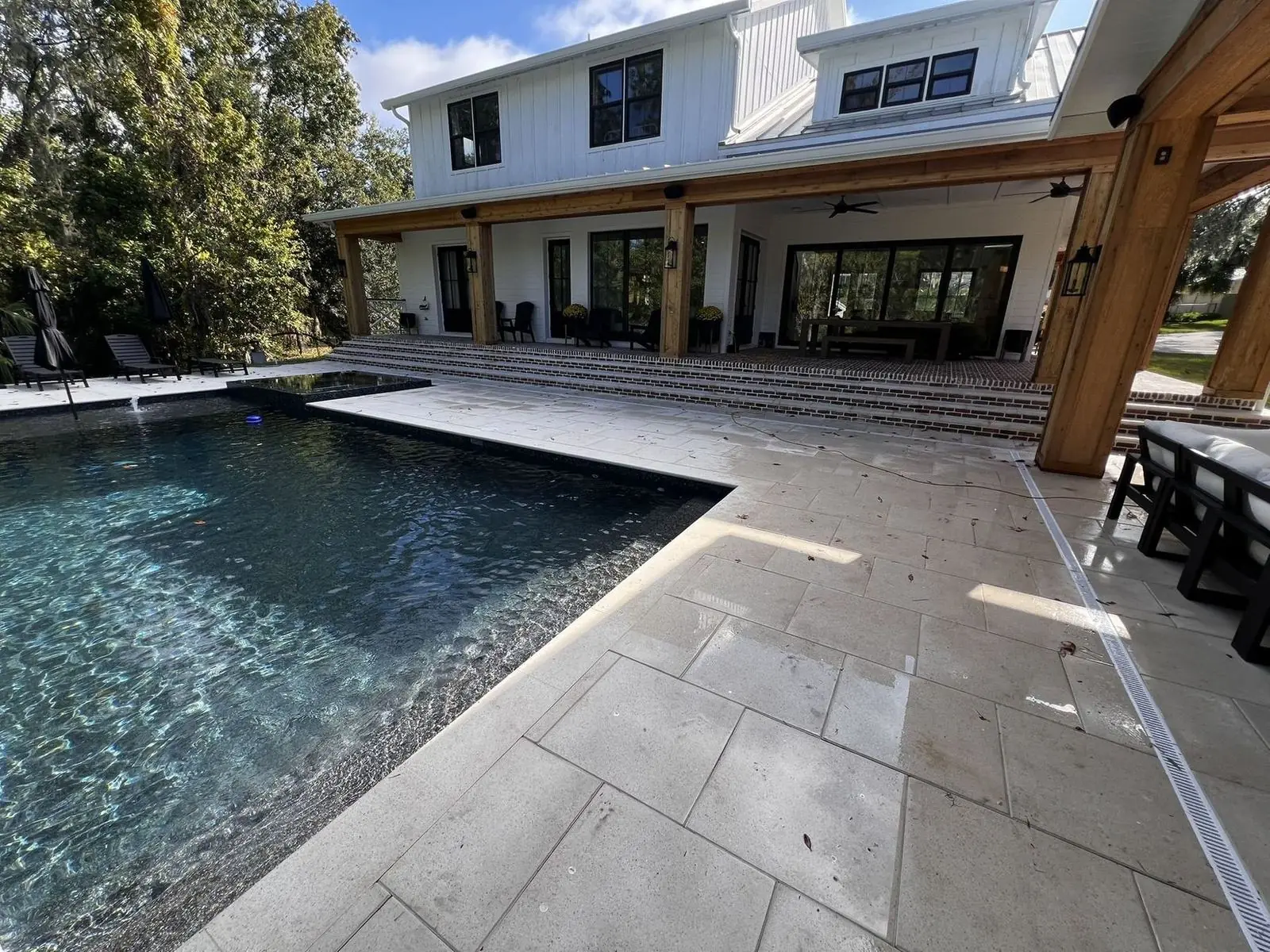
Color comes from the mix of pebble and pigmented cement. Light tan and white blends read as bright tropical blue. Blue and gray blends give a saturated turquoise. Black and charcoal blends create a deep, reflective lagoon effect that pairs well with modern architecture, though dark finishes absorb more heat and warm the water a few degrees in summer.
Why pebble holds up in Tampa Bay conditions
Florida is hard on pool interiors. Water stays warm most of the year, which speeds up chemical reactions; the sun burns off chlorine and pushes owners toward higher dosing; and most pools here run year-round rather than closing for winter. Plaster responds by etching, which is the rough texture people notice after five or six years. Pebble resists that wear because the stones themselves, not the cement, form most of the surface you touch.
Pebble also tolerates salt systems well. A salt chlorine generator keeps chlorine steady, but the water carries dissolved salt that is slowly hard on softer finishes. That is why we recommend pebble or quartz on any pool with salt, and why resurfacing is a good time to look at a saltwater conversion if you have been considering one. The salt system stays off for the first several weeks of curing, then comes online on a set schedule.
One Florida-specific caution: a high water table. Draining a pool in the rainy season can let groundwater push up on an empty shell. We check conditions before draining, open the hydrostatic relief valve where one exists, and schedule summer projects to keep the pool empty for as few days as possible.
How we apply it
Prep decides how long the finish lasts. After draining, we sound every wall and the floor for hollow areas. If the old plaster is delaminating or has been resurfaced before, we chip it out to the gunite. If it is sound and well bonded, we roughen it and apply a bond coat. Cracks are routed and filled, fittings are checked, and the waterline tile is either protected or replaced.
The pebble finish goes on in a single day by a full crew so there are no cold joints or color lines. Once it sets, exposed finishes are washed to reveal the stone and polished finishes are ground smooth. We start filling the same day and begin the startup chemistry immediately, then hand you a written 30-day care schedule covering brushing, pH, alkalinity, and when salt or an automatic cleaner can go back in.
- Drain and inspect: day 1
- Chip-out or bond coat, repairs, tile: days 2–5
- Pebble application and wash or polish: 1 day
- Fill and startup: begins the same day
Pairing pebble with other upgrades
Because the pool has to be drained anyway, resurfacing is the cheapest time to handle anything else that touches the shell. Replacing cracked or dated waterline tile and coping avoids a second drain-down later, and swapping old incandescent niches for LED pool lighting is simple while the water is out. Many owners also replace the deck at the same time, which our in-house paver crews can schedule around the finish work.
If the pool is also missing a spa, adding one requires draining and cutting the shell, so it fits naturally into a resurfacing project. One drain, one mobilization, and finishes that match from spa to deep end.
Let's Design Your Dream Pool
Free design consultation and 3D rendering. No pressure, no obligations.
Our Process
How We Build Your Pool
Design Consultation
Free on-site visit to walk your yard, talk through how you'll use the space, and set a realistic budget.
3D Design & Proposal
A custom 3D design of your pool, spa, deck, and outdoor living space with material selections and an itemized proposal.
Engineering & Permits
Engineered plans, permit submittal to your city or county, and HOA architectural approval, all handled by us.
Construction
Excavation, steel, plumbing, gunite shell, tile and coping, paver deck, equipment, and interior finish. One team, start to finish.
Startup & Orientation
We fill the pool, balance the chemistry, and walk you through every piece of equipment before we hand over the keys.
FAQ
Pebble Pool Finishes Questions
How much does a pebble pool finish cost in Tampa?
How long does a pebble pool finish last in Florida?
Is a pebble pool finish rough on your feet?
Is pebble worth it over plaster or quartz?
Can you put pebble on a saltwater pool?
How long does pebble resurfacing take?
Does a dark pebble finish make the pool warmer?
Often Paired With
Pool Tile & Coping Replacement
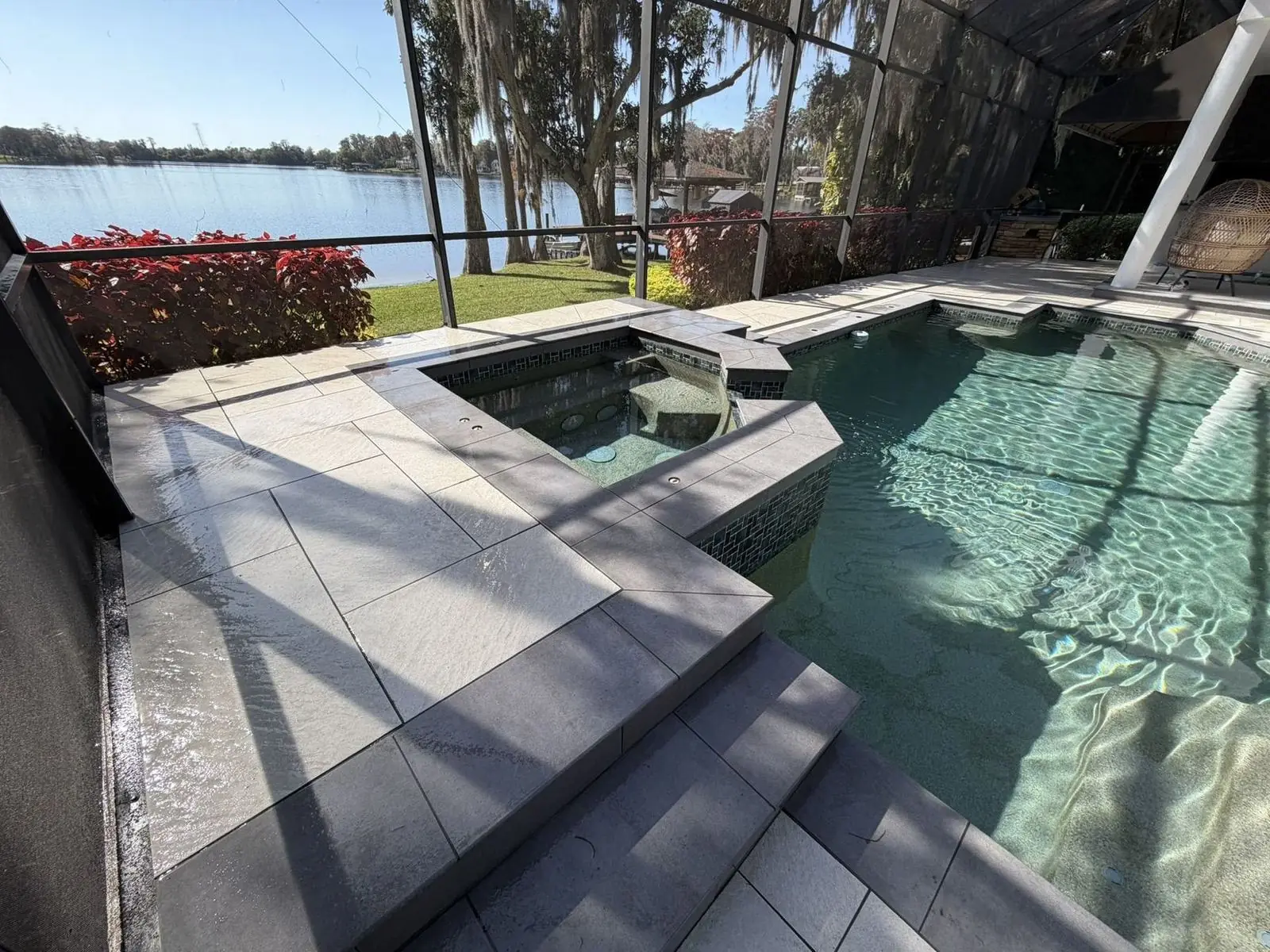
New waterline tile and coping that fix loose, cracked, and stained edges and give an older pool a current look, with bond beam repairs handled while the edge is open.
Saltwater Pool Conversion
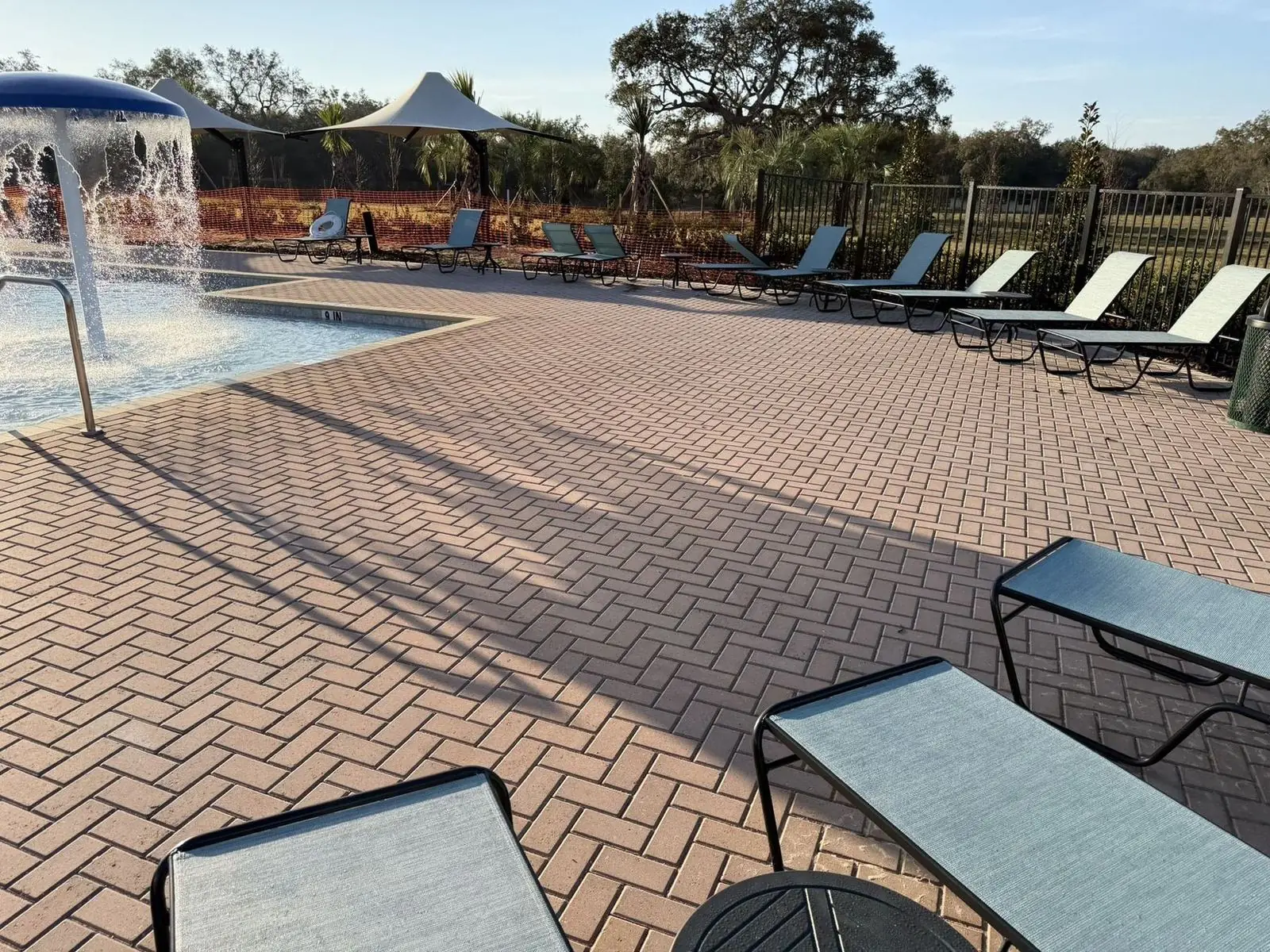
A salt chlorine generator that makes chlorine on site for softer water and steadier chemistry, installed after a review of the materials around your pool.
LED Pool Lighting
Color LED pool and spa lights that replace dim, power-hungry incandescent fixtures, with options for new light locations and app control.
Where We Work
Pool Resurfacing Across Tampa Bay
We build in six counties along Florida's Gulf Coast. Pick your community for local details, or browse every service area.
From the Blog
Related Reading
Pool Resurfacing Options: Plaster vs. Quartz vs. Pebble
Which interior finish is right for your Florida pool? A side-by-side look at cost, lifespan, feel, and color for the three finish families we install.
7 Signs Your Pool Needs Resurfacing (and When It's Really a Remodel)
Rough plaster, stains that won't lift, hollow spots, mystery water loss: how to read what your pool's interior is telling you, and how to decide between resurfacing and a fuller remodel.
Saltwater vs. Chlorine Pools in Florida: What Actually Matters
Salt systems are the default on most new Tampa Bay pools. Here is what they do, what they cost, and the few situations where traditional chlorine still makes sense.