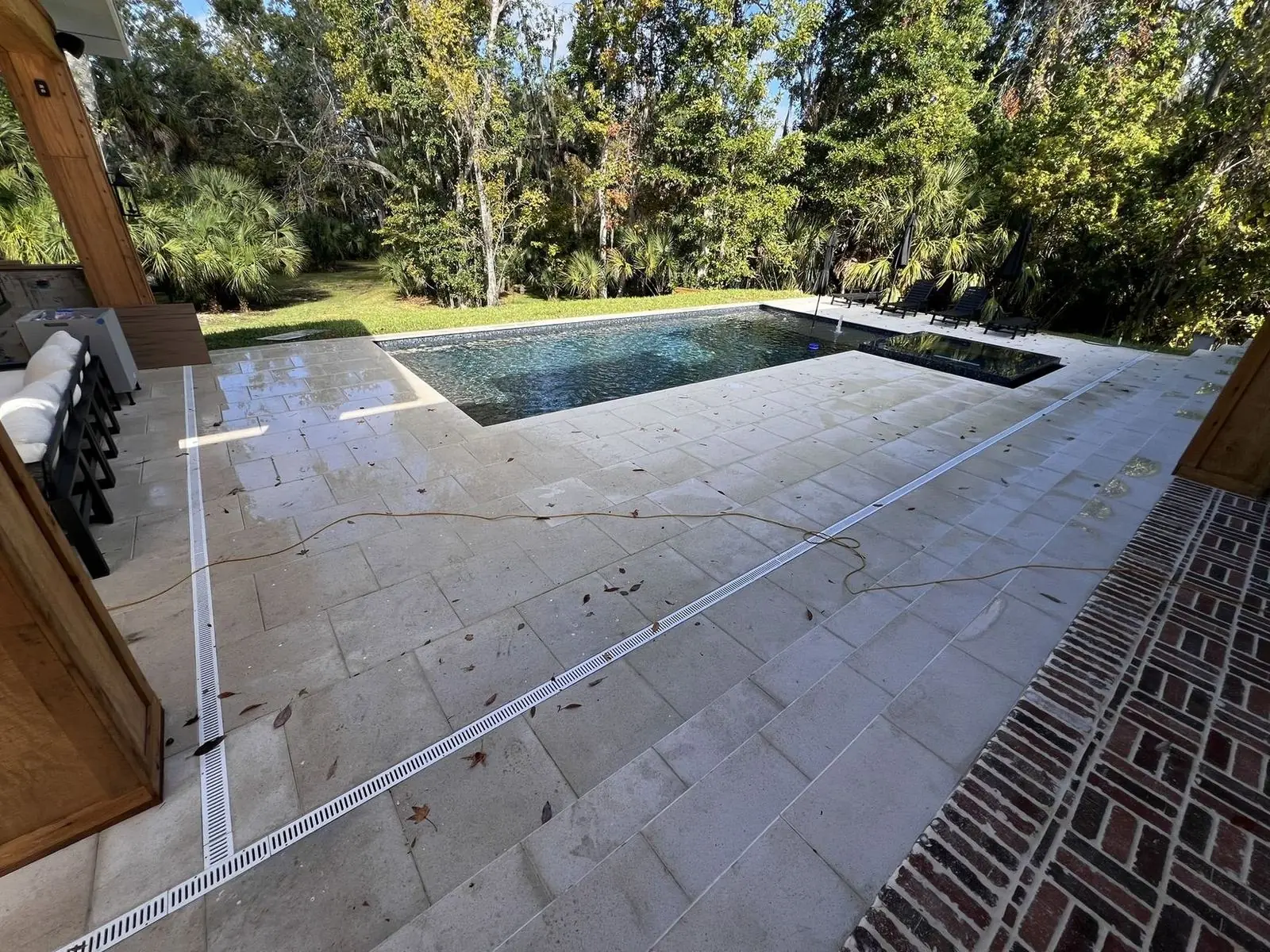
Travertine Pool Decks in Tampa Bay
Natural stone that stays comfortable underfoot in a Tampa summer, installed on a base built for Florida sand.
Start Your Project
Get a Free Quote
Free design consultation & 3D rendering. No pressure, no obligation.
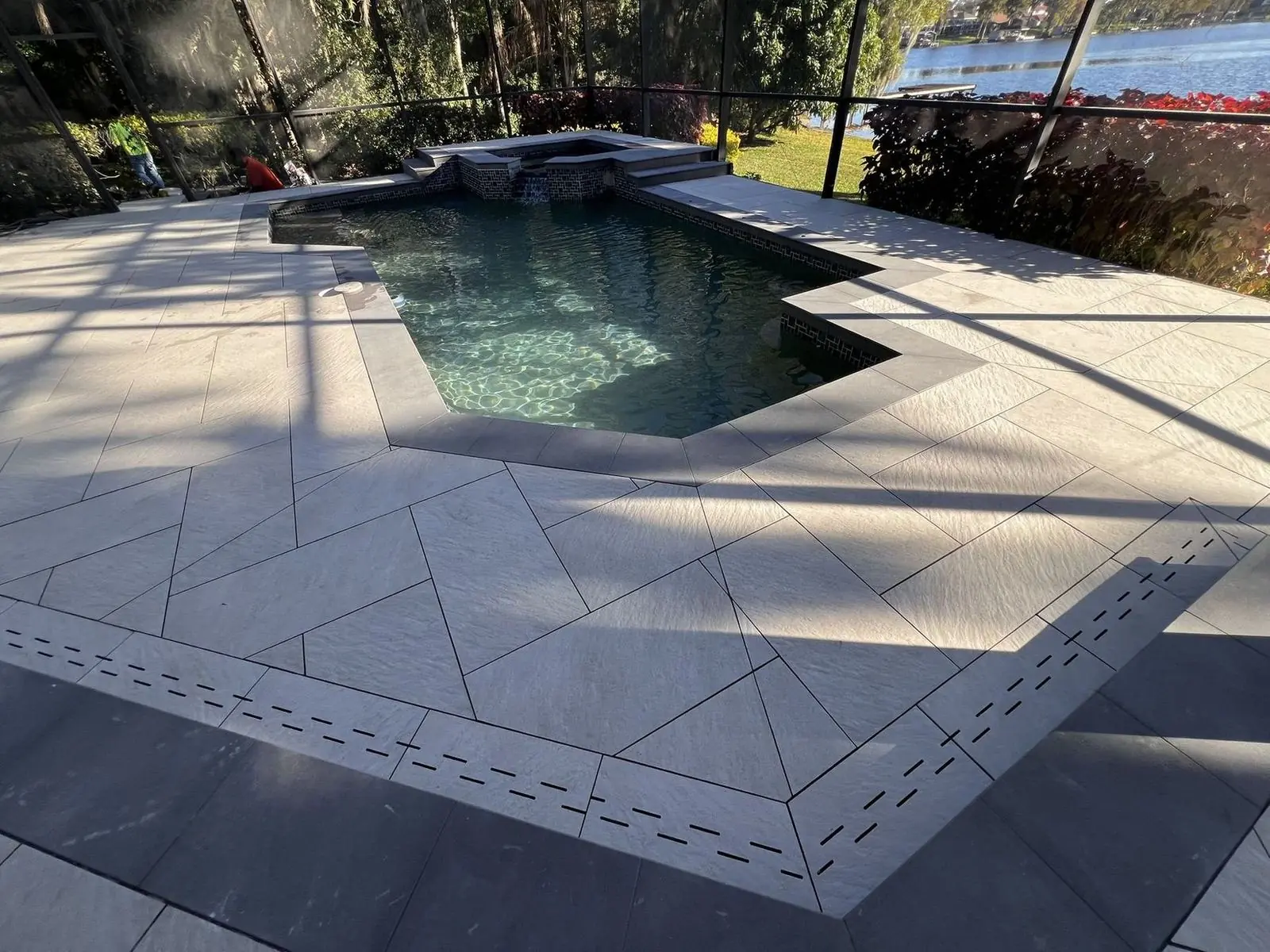
Pavers & Hardscaping
The Pool Deck You Can Walk On Barefoot in August
A travertine pool deck is a deck built from natural travertine pavers, a light, porous natural limestone cut into paver-thickness pieces, with matching travertine coping at the pool's edge. In Tampa Bay, travertine decks typically run $18 to $28 per square foot installed, so most residential pool decks land between $12,000 and $28,000 including coping.
Travertine costs more than concrete pavers, and the reason homeowners choose it anyway is comfort. Its light color and open pores keep it noticeably cooler than concrete or dark stone in direct sun, and its natural texture gives good grip when wet. It also looks like what it is: real stone, with color variation from piece to piece that no manufactured paver fully imitates.
Evolution Pools installs travertine with the in-house hardscape crews of Evolution Professional Pavers, paving Tampa Bay since 2014. We bring samples in several colors and finishes to your home so you can feel them in your own sun before choosing.
Pricing
What Travertine Pool Decks Costs in Tampa Bay
Typical project: $12,000–$28,000
| Item | Typical range |
|---|---|
| Demolition of existing deck and haul-offSkipped on an overlay | $2–$4 per sq ft |
| Travertine pavers sand-set on new shell-rock base | $20–$28 per sq ft |
| Travertine overlay mortar-set on a sound slab | $18–$26 per sq ft |
| Travertine bullnose or tumbled coping | $40–$80 per linear ft |
| Drainage corrections and linear drains | $1,000–$3,500 |
| Penetrating sealer, first application | $1.50–$3 per sq ft |
Deck square footage, overlay versus new base, travertine grade and finish (tumbled, brushed, or honed), and coping length move the price more than anything else.
Why travertine works in Tampa Bay heat
Surface temperature comes down to color and density. Dark, dense materials soak up and hold heat; light, porous ones reflect more sunlight and shed heat faster. Travertine is both light and porous, which is why a travertine deck can be dramatically more comfortable than charcoal concrete or slate on a July afternoon. Light ivory and walnut blends stay coolest. Silver and gray travertine runs slightly warmer but still well below dark pavers.
Texture matters as much as temperature around a pool. Tumbled and brushed travertine have softened edges and a slightly open surface that grips wet feet. We avoid polished travertine on pool decks entirely, and we steer clients away from glossy sealers, which trap heat and turn slick when wet.
Shade adds to the effect. Under a screen enclosure, the screen itself cuts some direct sun, and a covered lanai or pergola beside the pool gives the travertine a break during the hottest hours. Planning shade and deck together is part of our 3D design process.
Salt, sealing, and long-term care
Travertine's pores are what keep it cool, and they also absorb whatever lands on them. On a salt pool, splash-out can leave salt to crystallize in the stone, and over years that can cause surface spalling. A breathable penetrating sealer limits water and salt intake without changing the texture or trapping heat. We recommend sealing after installation and resealing every two to three years in Florida's climate, more often on decks that take heavy splash from a saltwater pool.
Day to day, care is simple: rinse salt and sunscreen off with a hose, sweep oak leaves and pollen before they stain, and avoid acidic cleaners, which etch limestone. Unlike a poured slab, an individual travertine paver that cracks or stains can be lifted and replaced, so damage stays small.
- Rinse the deck after heavy splash-out on salt pools
- Use pH-neutral stone cleaner, never muriatic acid
- Reseal every 2–3 years with a breathable, non-slip sealer
- Keep a few spare pavers from the original lot for repairs
Installation: sand-set on a new base or overlay on a slab
For a full replacement, we remove the old deck, regrade for drainage, place geotextile fabric over soft sand where needed, and compact crushed shell rock in lifts. Travertine pavers are set on a screeded bedding layer, edged with concrete restraints, and filled with polymeric sand. This approach lets the deck flex slightly with Florida's shifting sandy soil and makes individual pavers easy to replace.
If the existing concrete deck is sound and there is clearance at the doors and screen enclosure, thinner travertine can be mortar-set directly over the slab. It avoids demolition and can save time, but it depends entirely on the slab underneath, so we inspect it carefully before recommending it. Either way, the coping is set as a true finished edge, with a slight overhang that casts a shadow line at the waterline.
Pairing travertine with other pool upgrades
Because travertine coping sits directly on the pool's bond beam, a deck project is the natural time to replace dated waterline tile so the stone and tile are chosen together. Owners who are also resurfacing often schedule the interior finish right after the coping goes on so the whole pool finishes at once.
Travertine also extends easily beyond the pool: a matching patio for an outdoor kitchen, a walkway from the driveway, or steps down from the lanai, all built by the same crews in the same mobilization.
Let's Design Your Dream Pool
Free design consultation and 3D rendering. No pressure, no obligations.
Our Process
How We Build Your Pool
Design Consultation
Free on-site visit to walk your yard, talk through how you'll use the space, and set a realistic budget.
3D Design & Proposal
A custom 3D design of your pool, spa, deck, and outdoor living space with material selections and an itemized proposal.
Engineering & Permits
Engineered plans, permit submittal to your city or county, and HOA architectural approval, all handled by us.
Construction
Excavation, steel, plumbing, gunite shell, tile and coping, paver deck, equipment, and interior finish. One team, start to finish.
Startup & Orientation
We fill the pool, balance the chemistry, and walk you through every piece of equipment before we hand over the keys.
FAQ
Travertine Pool Decks Questions
How much does a travertine pool deck cost in Tampa?
Is travertine really cooler than pavers?
Is travertine slippery around a pool?
Does travertine work with a saltwater pool?
How long does a travertine pool deck last?
Can travertine be installed over my existing concrete pool deck?
Travertine vs. concrete pavers: which is better for a Florida pool deck?
Often Paired With
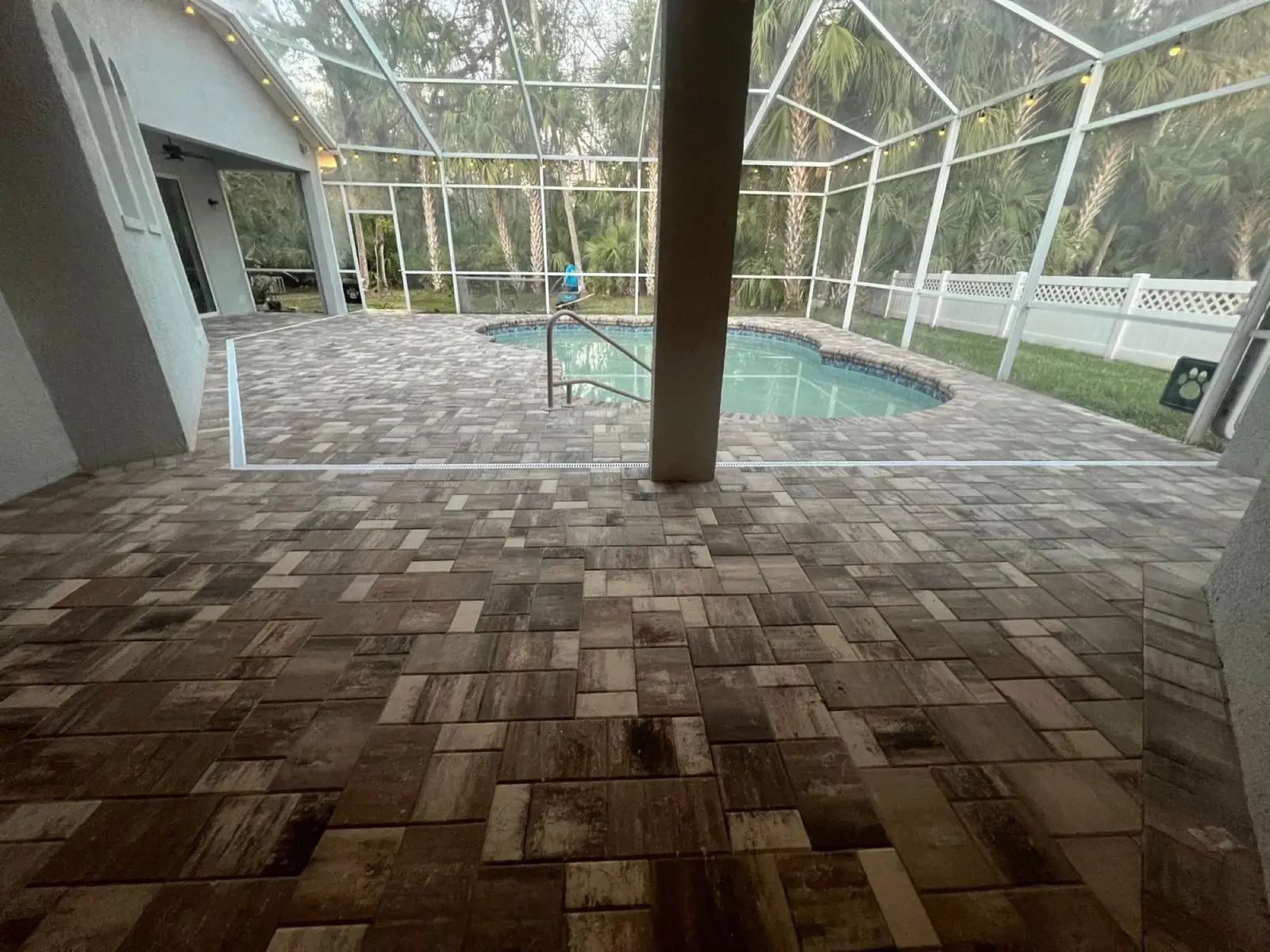
Pool Deck Replacement & Paver Overlays
Tear out a failing pool deck and rebuild it on a proper base, or overlay a sound slab with thin pavers. Built by the in-house crews behind Evolution Professional Pavers.
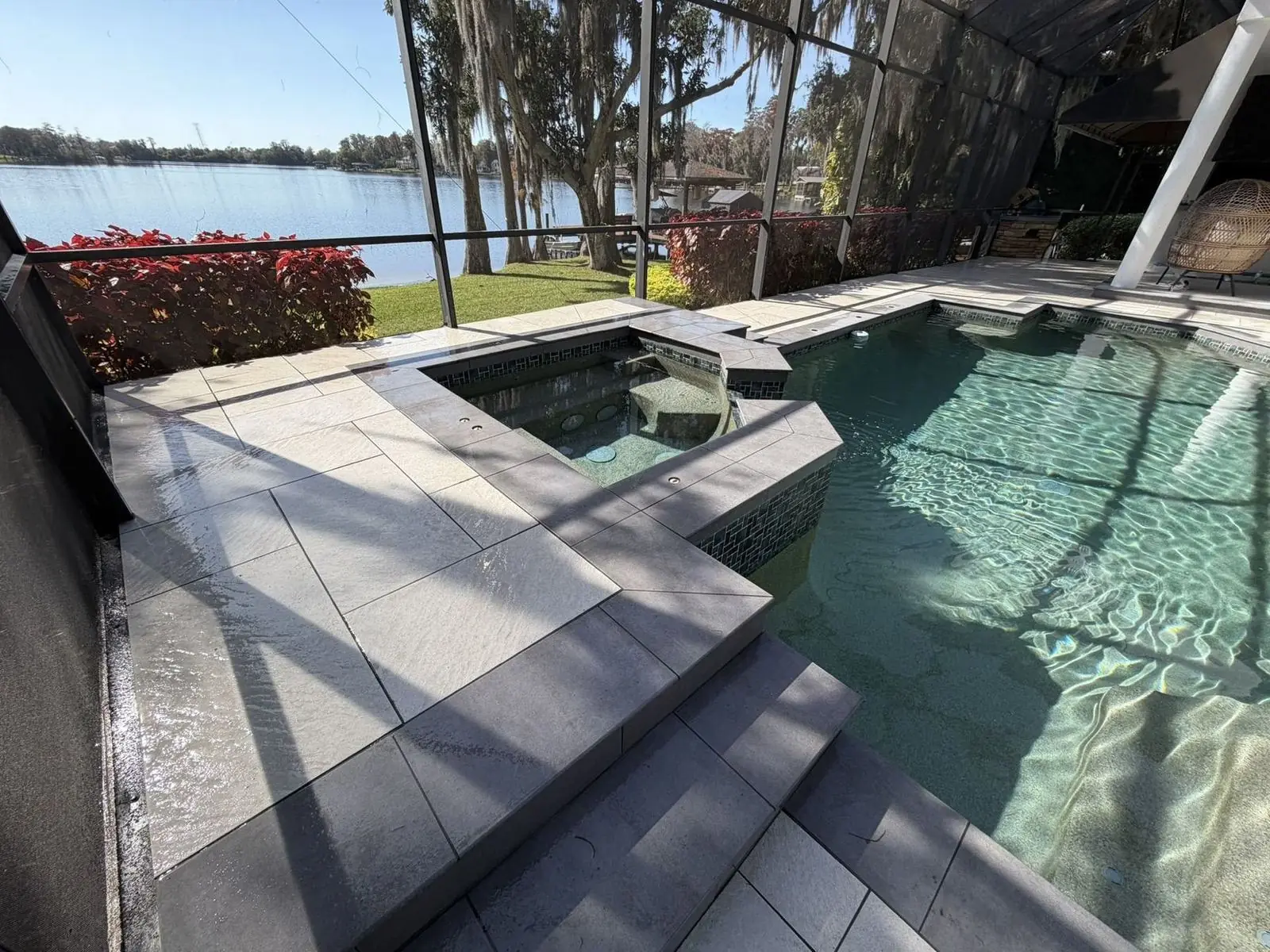
Pool Tile & Coping Replacement
New waterline tile and coping that fix loose, cracked, and stained edges and give an older pool a current look, with bond beam repairs handled while the edge is open.
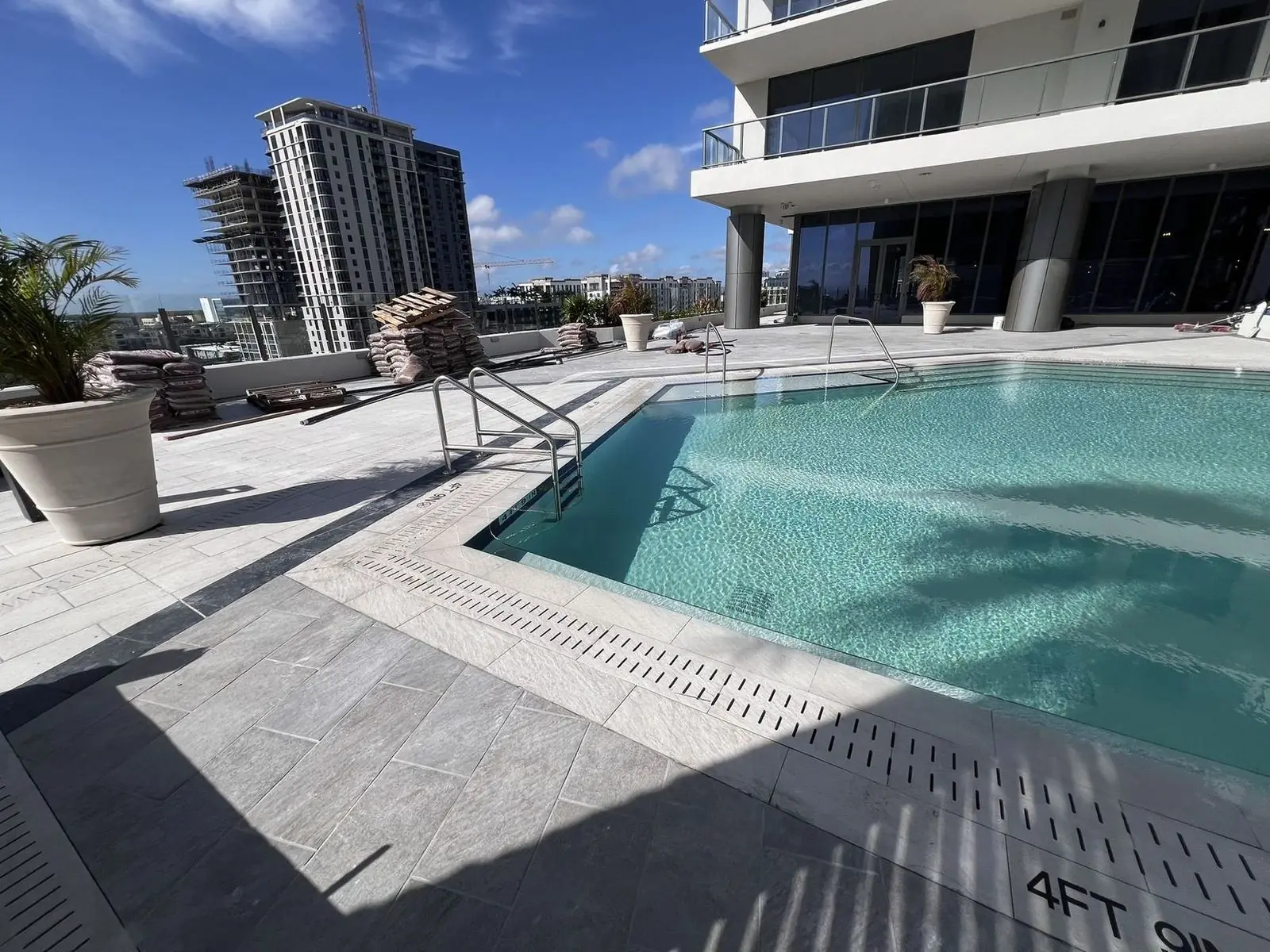
Pebble Pool Finishes
Exposed and polished pebble aggregate finishes for Tampa Bay pools. The longest-lasting interior surface we install, with colors from tropical blue to deep lagoon.
Where We Work
Pavers & Hardscaping Across Tampa Bay
We build in six counties along Florida's Gulf Coast. Pick your community for local details, or browse every service area.
From the Blog
Related Reading
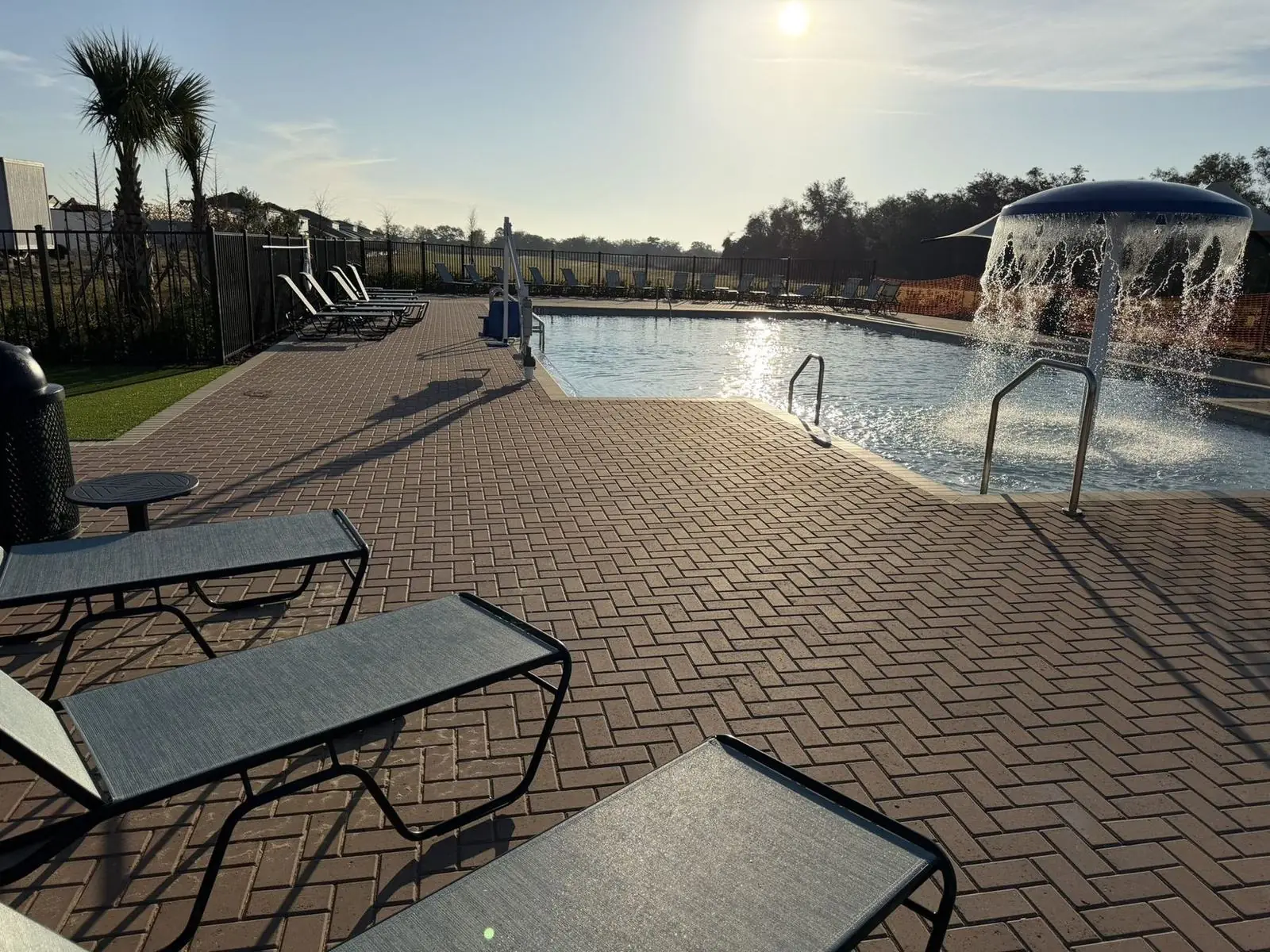
Pool Deck Materials That Stay Cool in the Florida Sun
Travertine, shell-tone pavers, and light finishes: how to choose a pool deck you can actually walk on barefoot in August, and what to avoid.
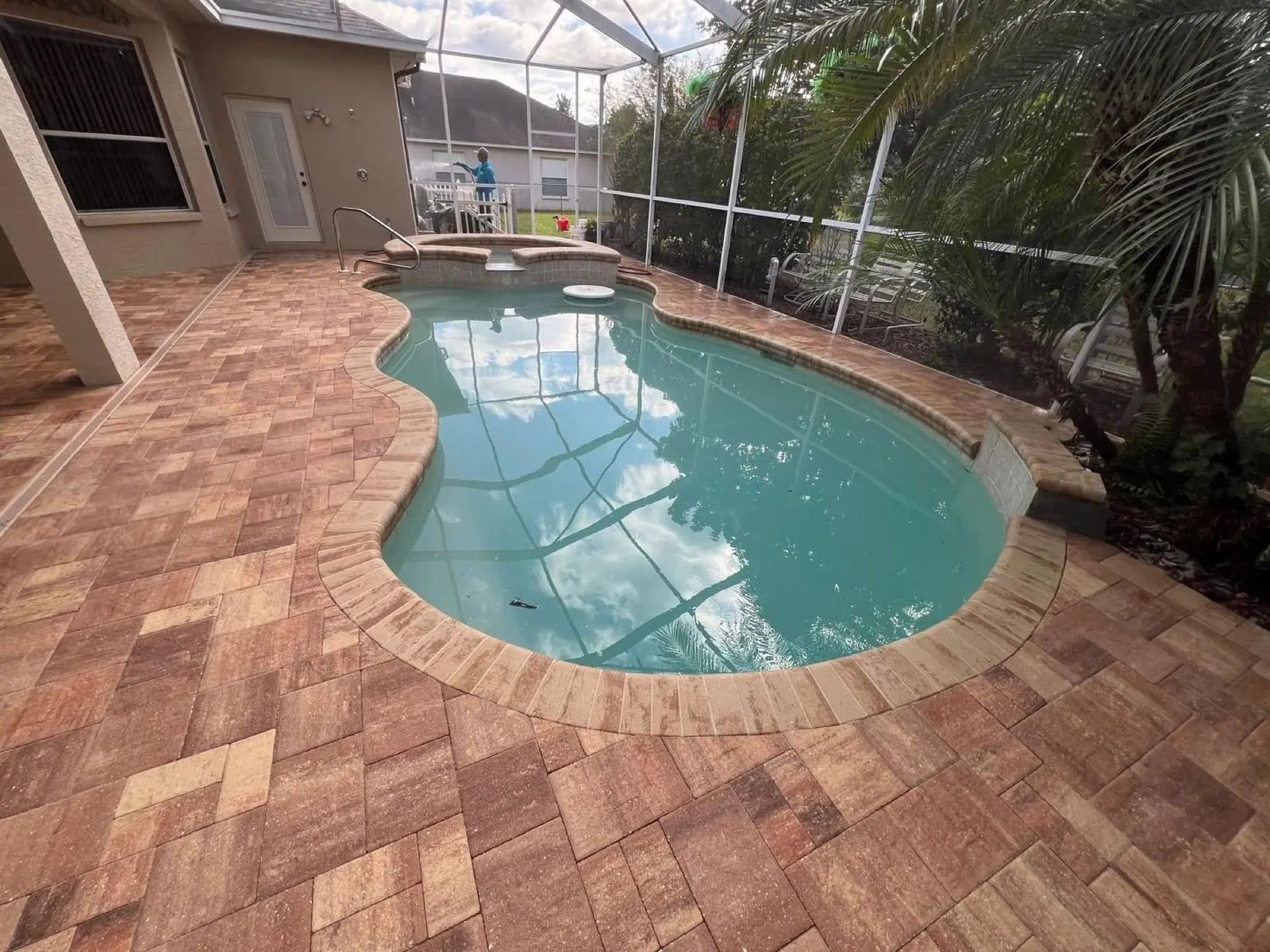
Saltwater vs. Chlorine Pools in Florida: What Actually Matters
Salt systems are the default on most new Tampa Bay pools. Here is what they do, what they cost, and the few situations where traditional chlorine still makes sense.
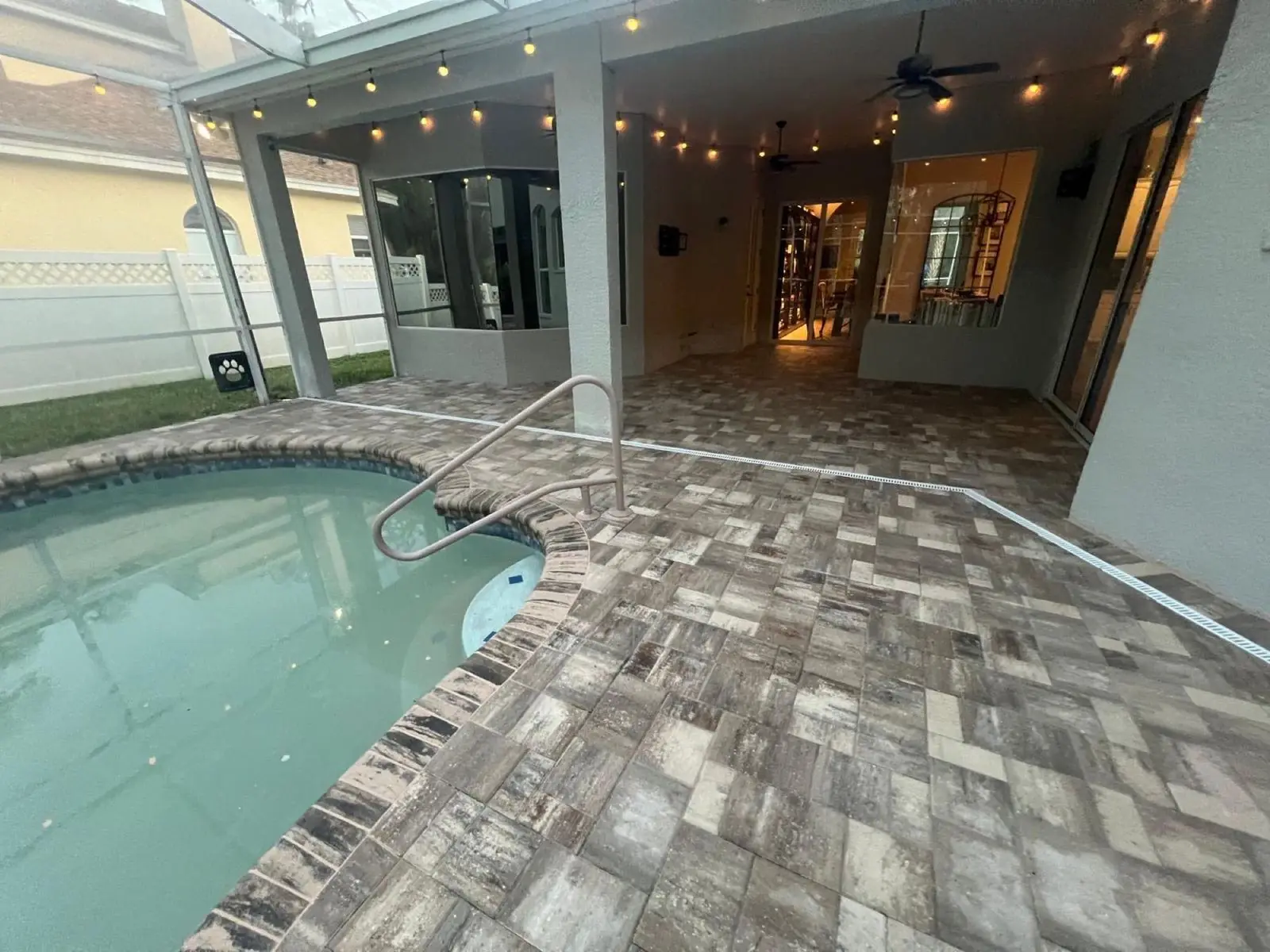
Do You Need a Screen Enclosure for Your Florida Pool?
The pool cage is a Florida institution: what it does, what it costs, picture-window designs that keep the view, and when going without makes sense.